Dirt Bike and ATV Trails Near Me: Sharing the Track With Four Wheels
A search for dirt bike and ATV trails near me usually turns up a pile of pins, screenshots, and forum threads that all point at the same handful of riding areas. The hard part is not finding a trail. The hard part is figuring out which of those trails actually allow both machines, which ones are bike-only, and how to ride a shared corridor without turning a fun day into a close call with a quad you never saw coming.
Most trail listings are clearer than riders expect once you know what to look for. Width limits, trail ratings, and one-way designations tell you almost everything about whether a route suits a dirt bike, an ATV, or both. Read those three things first and you can skip a lot of wasted driving.
Start With the Width Limit
Trail directories that cover mixed-use riding frequently describe ATV-friendly routes as accessible for vehicles up to 50 inches wide, a category built for ATVs and smaller off-road machines. That single number is the most useful filter in the whole listing.
Think about what it means in practice. A dirt bike is far narrower than 50 inches, so any trail that will accept a 50-inch machine will physically accept a bike. The reverse is not true. A single-track line that a bike slips through easily can be completely closed to a quad, and often is by design.
So when a listing says a trail is open to vehicles up to 50 inches wide, read it as a shared route. When a listing says single-track, read it as motorcycle territory. Listings for areas around Champaign, Illinois, Austin, Texas, and Bentonville, Arkansas all use that same 50-inch phrasing to describe their ATV-accessible routes, which makes the language worth recognizing wherever you ride.
Trail Types You Will See on the Same Map
Mixed-use areas rarely offer one kind of trail. They stack several, and each one behaves differently when bikes and four wheels share the same parking lot.
- Single-track motorcycle trails. Narrow, one-rider-wide routes. Listings for the Red Spring area near Redington Pass describe an extensive network of single-track trails, which is bike country, not quad country.
- Jeep roads and wide two-track. The same Redington Pass listings describe one ATV trail and plenty of jeep roads that are very rocky. Wide enough for four wheels, rough enough to demand attention on two.
- Designated OHV parks with open riding zones. Managed areas with acreage set aside for free riding, plus marked loops and hill climbs.
- Rated, one-way trail systems. Loops with difficulty ratings and directional travel, which is the safest format for mixed traffic.
Knowing which type you are heading for changes what you pack, how fast you ride, and how visible you need to be.
Three Mixed-Use Areas Worth Studying
You do not need to ride these specific parks to learn from them. Their published layouts show what a well-organized shared facility looks like, and that pattern repeats across the country.
| Riding area | What the listing describes | Why it matters for mixed use |
|---|---|---|
| The Ridge, Alabama | Over 35 miles of marked and rated one-way trails, 15 miles of single-track motorcycle trails, a motocross track | Bikes get their own single-track while shared loops stay directional |
| Rathbun OHV Park, Iowa | Over 100 acres of designated riding area, trails, hills, and open riding zones for ATVs, side-by-sides, and dirt bikes | Open zones absorb mixed traffic without forcing bikes and quads into the same narrow line |
| Kewaunee Riverview ATV Park | 20 miles of trails with two ravines, a hill climb area, and an intense use challenge course | Features are separated, so technical sections can be managed one group at a time |

One-Way Ratings Matter More Than Trail Miles
A park with 15 miles of directional trails is usually a better bet for a mixed group than a park with 40 miles of unmarked two-way paths. Head-on collisions are the single biggest risk when bikes and quads share a corridor, and directional travel removes most of that risk before anyone touches a throttle.
Difficulty ratings do the rest of the work. Ratings let a bike rider and a quad rider in the same group pick different loops for an hour and meet back at the truck, instead of dragging a 50-inch machine onto a line it was never meant to handle. If a trail system publishes ratings, use them as intended rather than treating them as suggestions.
Where Bikes and Quads Genuinely Mix Well
Some terrain suits both machine types without much friction. Wide jeep roads are the obvious example. They are built for four wheels, they offer plenty of passing room, and they give a bike rider a chance to learn a rocky, technical line without being trapped in it.
Open riding zones work well too. Riders can spread out, choose their own lines, and avoid stacking up behind slower traffic. Motocross tracks and dedicated practice tracks are effectively bike-only environments inside a shared park, which keeps the two styles of riding from colliding.
Marked one-way loops with a range of difficulty are the third good option. Everyone moves the same direction, faster riders can pass on the straights, and slower groups can wave people through without stopping the whole trail.
Where They Do Not Mix
Single-track is the clearest no. A quad physically will not fit, and a rider who tries anyway chews up the trail for everyone. Rock gardens and tight tree sections create the same problem in a different form. A bike can pick a line through the rocks. A 50-inch machine pushes them around and reshapes the trail over time.
Hill climbs deserve their own caution. A quad climbing a steep face has very little ability to stop or change direction, and a bike coming down the same hill has limited options too. Unless the park separates uphill and downhill traffic, treat hill climb areas as one-group-at-a-time features and wait your turn.

Passing and Being Passed on a Shared Trail
The rider behind is responsible for a safe pass, but the rider in front can make it easy or impossible. On a shared corridor, hold your line when you hear an engine closing in and let the faster rider commit to a side. Wobbling toward the noise is how two machines end up in the same rut.
If you are the one passing, be patient on blind corners and crests. A quad takes up most of a two-track, and the driver may not be able to move over even if they want to. Wait for open ground, make your move decisively, and give a wave once you are clear.
Visibility helps more than anything else. Running a headlight, wearing bright gear, and keeping your speed reasonable on blind sections costs nothing and buys time.
Prep Your Bike for Rougher Shared Ground
Trails shared with quads tend to be looser, rockier, and more chewed up than bike-only single-track. Skid plates and hand guards earn their keep quickly in that environment. Tire choice matters too, since loose climbs and rocky descents punish a worn rear.
Carry the basics. Water, a way to fix a flat, and a plan for what happens if a machine breaks down miles from the trailhead. A quad can often tow a disabled bike out. A bike cannot return the favor, which is one more reason to be generous with the four-wheel crowd on the trail.
How to Actually Find Trails Near You
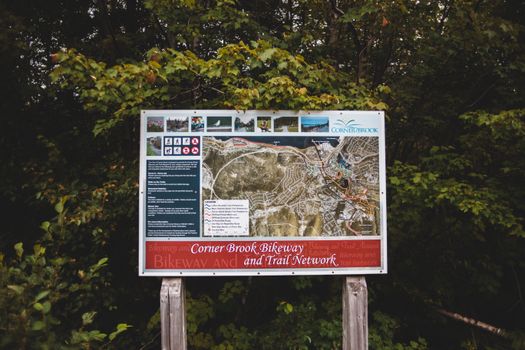
Search tools do a lot of the work if you use the right words. Try your city or region combined with ATV trails, OHV park, or riding area, and check the results against the source. Trail databases such as TrailLink publish descriptions, reviews, photos, and maps for local ATV trails, and those reviews often reveal conditions the official listing leaves out.
County and state park departments are worth checking directly. Los Angeles County park listings, for example, point riders toward designated off-highway vehicle areas roughly 12 miles east of the city. State-level OHV programs are usually the authority on which trails are open and which have width restrictions.
Confirm Permits and Closures Before You Drive
Permit requirements vary widely and change often. Listings for the Redington Pass area note that a permit is part of the picture there, which is a reminder to confirm the current rule with the managing agency before you load the truck. The same goes for seasonal closures, fire restrictions, and any recent storm damage.
Verify entry fees, hours, and current trail status with the official land manager or park office. Trail databases and forum posts are useful for planning, but they go stale. One phone call or one look at the official page saves a wasted trip.
Frequently Asked Questions
Can I ride a dirt bike on ATV trails?
Often yes. Trails described as open to vehicles up to 50 inches wide will physically accept a dirt bike, since a bike is much narrower. Check the specific designation anyway, because many systems set aside single-track routes for motorcycles only and expect bikes to stay off dedicated quad loops.
What does a 50-inch trail mean?
It describes a route built for machines up to 50 inches wide, which covers most ATVs and smaller off-road vehicles. A dirt bike fits easily within that limit. If your quad or side-by-side is wider than the stated number, that trail is not open to you regardless of how the map looks.
Are one-way trails safer for mixed groups?
They generally are. Directional travel removes head-on encounters, which is the biggest risk when bikes and quads share a corridor. Rated one-way loops also let a mixed group split up by skill level and meet back at the trailhead without forcing every rider onto the same terrain.
Do I need a permit to ride OHV trails?
Sometimes. Requirements vary by state, county, and individual riding area, and some listings mention permits as a condition of access. Confirm the current rule with the park office or managing agency before you drive out, and ask about seasonal closures at the same time.
How do I find ATV and dirt bike trails near me?
Search your city or region with terms like ATV trails or OHV park, then cross-check the results. Trail databases publish maps, photos, and rider reviews, while county and state park departments list designated off-highway vehicle areas and their rules. Always verify conditions with the official source before riding.
- Dirt Bike and ATV Trails Near Me: Sharing the Track With Four Wheels
- Dirt Bike Rental and Trails Near Me: Try Before You Buy in 2026
- Public Dirt Bike Trails Near Me: Check Passes and Rules
- Dirt Bike Trails Near Me: Finding Legal Riding Spots in 2026
- Dirt Bike Riding Trails Near Me: Find Open Ground in 2026
- Choosing the Right Chest Protector for Dirt Biking: A Comprehensive Guide
- Unleashing the Thrill: A Comprehensive Guide to 50cc Dirt Bikes
- Enhance Your XR650L Adventure: A Comprehensive Guide to Accessories
- Wide Calf Motorcycle Boots: The Ultimate Guide for Riders
- Dirt Bikes Unleashed: Navigating the Off-Road Odyssey
- Mastering the Dirt: A Comprehensive Guide to Motocross School Success
- Enhancing Your Ride: Exploring KLX 110-Foot Pegs
- The Kawasaki KLX110R: Unleashing the Dirt Bike Thrill
- A Comprehensive Guide on How to Make Your Dirt Bike Faster
- Mastering the Art of Dirt bike Maintenance: A Comprehensive Guide
Leave a Reply