Chest Protector Dirt Bike Fit: Measure Before You Buy
A chest protector only does its job while it stays where it was designed to sit. If the shoulder straps slide out toward your arms, if the back plate rides up, or if the front panel presses into your collarbone when you lean forward, the gear is no longer covering the spots it was built to cover. Ordering by height and weight alone is how riders end up with a protector that feels fine in the garage and miserable on the third lap.
Fit for a chest protector dirt bike setup comes down to four body measurements and two pieces of gear you already own. Below is what to measure, how to measure it without help, and how the numbers translate into a protector that stays put.
Why the Size Label on the Box Is Only a Starting Point
Walk through any parts listing and you will see the sizing problem immediately. One protector is labeled simply “One Size.” Another is listed as a small/medium. A third shows up as unisex adult medium. Those labels are not measured the same way across brands, and they do not account for whether you are built wide through the shoulders or long through the torso.
That does not make the labels useless. It just means the label is the beginning of the decision, not the whole decision. Two riders who both wear a medium jersey can need different protectors because one has a longer torso and the other has broader shoulders.
The practical approach is to measure yourself, write the numbers down, and use them to filter options. When a listing gives you a size range, compare your numbers to that range. When a listing gives you almost nothing, having your own measurements tells you whether it is worth ordering at all.
The Four Measurements That Decide Whether a Protector Fits
Take all four with a soft measuring tape. A tailors tape is best. In a pinch, use a piece of string and lay it against a ruler afterward.
- Chest circumference at the fullest point, tape level across your back and around the widest part of your chest. Keep it snug but not tight enough to compress. This is the number that decides whether the side panels close without pinching.
- Torso length from the base of your neck, roughly where the collarbones meet, down to your natural waist. This decides whether the front panel ends near your belt line or stops well above it.
- Shoulder width across the back, from the point of one shoulder to the point of the other. This decides whether the shoulder cups land on your shoulders or float outside them.
- Waist circumference at the point where you normally wear your pants. This shows where the bottom edge of the protector will sit when you are standing and when you are crouched over the bars.
If you are buying for a child, take the same four measurements. Do not size up for growth. A protector with slack in the shoulders and a back plate hanging low is a protector that will move around while they ride.
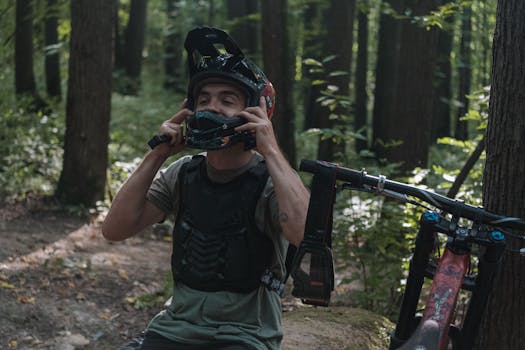
How to Measure Yourself Without Help
Measuring a chest circumference alone is awkward, but it is manageable with a simple trick. Loop the tape around your body, bring both ends to the front, pinch them together at the correct tension, and read the number in a mirror. For torso length, hook the tape at the base of your neck, let it hang, then pin it to your waistband with a clip or hold it there and step out.
- Wear the same base layer you ride in. A thin jersey gives a different number than a thick hoodie.
- Stand relaxed with your arms down for chest and waist measurements. Do not puff your chest out.
- Repeat each measurement twice. If the two numbers differ by more than a small amount, take a third and use the middle value.
- Write the numbers down along with the date and what you were wearing.
Accuracy matters most on chest circumference and torso length. Those two numbers cause the majority of bad fits.
Match Your Measurements to the Type of Protector
Different styles of protection pull on different parts of the body. A roost guard that hangs over a jersey has different fit requirements than a full vest with shoulder cups and side panels. The table below shows what to prioritize for each style.
| Style | What it typically covers | Measurement to check first |
|---|---|---|
| Roost guard or deflector | Front chest panel, usually with a back plate | Chest circumference, then shoulder width |
| Chest and spine protector | Chest plate plus a longer spine section down the back | Torso length, so the spine section does not sit too low |
| Vest or body armor with shoulder and side coverage | Chest, back, shoulders, sometimes upper arms | Shoulder width, then room for a base layer underneath |
A long torso is the most common source of trouble with chest and spine protectors. If your torso measurement is on the longer side, pay attention to where the lower edge of the spine section lands. If the protector is short through the body, the bottom edge will creep upward when you are standing on the pegs.
Layering Changes the Fit More Than You Think
Measure with the layers you actually ride in, then add room for anything that goes under or over the protector. A few things to account for:
- A jersey over the top of a roost guard adds bulk at the shoulders and chest.
- Elbow guards and a neck brace sit close to the edges of the protector and can push straps out of position.
- A hydration pack sits over the back plate and can pull the shoulder straps backward.
- Cold weather layers change your chest circumference, sometimes noticeably.
A protector that fits exactly with no room to spare may become uncomfortable once you add a neck brace or a pack. It is reasonable to favor a slightly roomier fit if you always ride with extra layers, as long as the shoulder straps can still be snugged down.

Youth and Kids: Fit Rules That Are Worth Being Strict About
Parents buying gear for a young rider face a lot of pressure to buy for next season. Resist it with chest protection. A protector that is two sizes too large will sit low on the chest and high on the shoulders, and the front panel may not line up with the chest at all once the rider is bent over the handlebars.
Take fresh measurements each season instead of guessing from clothing sizes. Kids grow at different rates, and a jersey size is a poor stand-in for a chest circumference.
The Fit Check When the Box Arrives
Try the protector on before you remove any tags, and do it with your riding jersey on. Test it in the positions that matter, not just standing in front of a mirror.
- Bend forward into a riding crouch. The front panel should stay over your chest, not swing away from your body.
- Raise both arms overhead, then bring them down. The shoulder straps should return to roughly the same spot.
- Twist side to side. The back plate should stay centered on your spine.
- Reach forward as if you are on the bars. Check for pressure points at the collarbone and under the arms.
- Sit down and lean back. The bottom edge should not jab into your stomach or lower back.
If it fails more than one of these tests, return it while the return window is open. Most retailers expect returns to come back clean and unworn, so do the check indoors.
Brands and Where Riders Usually Shop
Retail listings for dirt bike and motocross chest protectors commonly feature Alpinestars, Fox Racing, and Leatt, and Fly Racing protectors appear in both adult and one-size listings. Rocky Mountain ATV/MC carries a dedicated roost and chest protector selection, and eBay listings add new and pre-owned options, including used chest and spine protectors.
One widely shared buyer’s guide names the Leatt 5.5 Pro Chest Protector as the pick for most dirt bike riders and the one the author personally owns. Treat that as one rider’s recommendation rather than a universal answer. Your measurements, your riding style, and the layers you wear should drive the final call.
Buying used is a reasonable way to save money, but inspect photos for cracked plastic, stretched straps, and missing hardware. Ask the seller for the actual measurements of the protector laid flat, then compare those numbers to your own. A used protector that fits beats a new one that does not.
Frequently Asked Questions
Should I wear a chest protector over or under my jersey?
It depends on the style. Roost guards and deflectors are generally designed to be worn over a jersey so the outer shell can deflect dirt and rocks thrown by other bikes. Vests and body armor with shoulder coverage are often worn under the jersey. Check the product description before you buy and confirm which way the manufacturer intends it to be worn.
Should I measure with or without riding gear on?
Measure in the base layer you normally ride in, then add a small allowance for whatever goes over or under the protector. If you always ride with a neck brace, hydration pack, or heavy jacket, take your chest measurement with those layers on, since chest circumference is the number most affected by extra bulk.
How can I tell if my chest protector is too big?
The clearest signs are shoulder straps that slide outward toward your arms, a back plate that rides up when you lean forward, and a front panel that swings away from your chest in a riding crouch. If you can pull the front panel several inches away from your body without adjusting the straps, it is loose.
Can I use a neck brace with a chest protector?
Many protectors are shaped to work alongside a neck brace, but compatibility varies by model and by brace. Before ordering, confirm that the protector you are considering is intended for use with a neck brace, and test the combination during the fit check while the return window is still open.
Do I need to replace a chest protector after a hard crash?
Inspect it carefully. Cracked plastic, stretched or frayed straps, missing rivets, or a shell that no longer holds its shape are all reasons to stop using it. When in doubt, replace it. Contact the manufacturer if you are unsure whether a specific protector is designed to be used after an impact.
- Chest Protector Dirt Bike Fit: Measure Before You Buy
- Kawasaki KLX 110 Parts Guide 2026: What Fits and What to Buy
- Buying a Used Dirt Bike Checklist: 10 Things to Check in Person
- NH Dirt Bike Trails: A Weekend Loop for New Riders
- Buying Your First Dirt Bike: A 2026 Checklist for New Riders
- Buying Your First Dirt Bike: A 2026 Checklist for New Riders
- Single Track Dirt Bike Trails: Skills You Need First
- Dirt Bike and ATV Trails Near Me: Sharing the Track With Four Wheels
- Dirt Bike Rental and Trails Near Me: Try Before You Buy in 2026
- Public Dirt Bike Trails Near Me: Check Passes and Rules
- Dirt Bike Trails Near Me: Finding Legal Riding Spots in 2026
- Dirt Bike Riding Trails Near Me: Find Open Ground in 2026
- Choosing the Right Chest Protector for Dirt Biking: A Comprehensive Guide
- Unleashing the Thrill: A Comprehensive Guide to 50cc Dirt Bikes
- Enhance Your XR650L Adventure: A Comprehensive Guide to Accessories
Leave a Reply